

It is a hot summer afternoon in the Philippines. Your electric fan is running, your refrigerator is keeping food cold, and you're trying to finish an important task online.
Then suddenly, the power goes out.
The fan stops. Your Wi-Fi disconnects. Your phone battery is already running low. The refrigerator stops cooling, and within minutes, the house starts feeling even hotter.
During El Niño, extreme summer heat, and unexpected brownouts, losing electricity can be more than an inconvenience. It can affect your comfort, work, communication, food storage, and home security.
So instead of asking "What power station should I buy?", a better question is:
"What do I actually need to keep running when the electricity goes out?"
Once you know that, choosing the right backup power solution becomes much easier. The process can be summarized as:
Essential Devices → Power Needs → Runtime → Solar (optional) → Right EcoFlow Solution
What's on this page
- What is the best backup power for a brownout?
- What should you keep running?
- How much power do you actually need?
- Can solar panels help during a brownout?
- What is a hybrid home energy setup?
- Can a power station run an air conditioner?
- What happens if you overload a power station?
- What is a UPS and do you need one?
- Which EcoFlow solution makes sense for you?
- How can the EcoFlow app help?
- Don't buy the biggest power station just because you can
- How to prepare for El Niño and summer brownouts
- Frequently asked questions
- Conclusion
 1. What Is the Best Backup Power for a Brownout?
There isn't one backup power solution that is right for every household. The best option depends on what you need to power, how much electricity those devices consume, and how long the brownout may last.
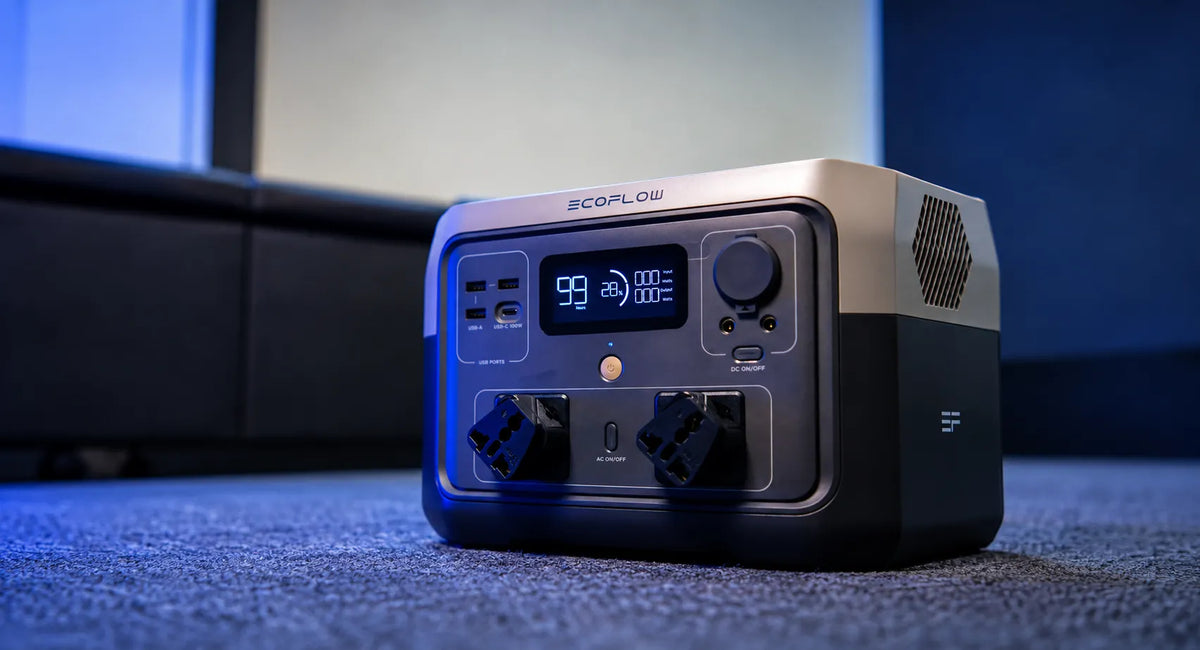
- For basic electronics such as Wi-Fi routers, phones, lights, and laptops, the EcoFlow RIVER Series can provide portable backup power.
- For higher power requirements and multiple household devices, the EcoFlow DELTA Series offers greater capacity and output.
- For homeowners looking beyond occasional brownouts toward a more comprehensive home energy system, EcoFlow PowerOcean is designed for larger residential energy needs.
Some EcoFlow power stations also provide UPS functionality, which can help provide rapid backup when electricity suddenly cuts out. The key is to choose based on your actual energy requirements rather than simply buying the biggest battery available.
2. What Should You Keep Running During a Brownout?
You don't necessarily need to power your entire home. Start by identifying your essential devices. These may include:
- Wi-Fi router
- Mobile phones
- Lights
- Laptop or computer
- Electric fan
- Refrigerator
- Security cameras
- Work equipment
- Essential household equipment
Your priorities may also change depending on the situation. If you're working from home, keeping your router and laptop running may be more important than powering your television. During extreme heat, an electric fan may become a higher priority. During a longer outage, keeping your refrigerator running can become more important.
A simple way to prioritize your needs:
Communication → Work → Cooling → Food → Security
This gives you a starting point before deciding how much backup power you actually need.
 3. How Much Power Do You Actually Need?
Two numbers are particularly important when choosing a power station: Watts (W) and watt-hours (Wh).
Watts determine what you can run
If your appliances require more power than the power station can provide, the system may not be able to operate them. A small Wi-Fi router may require only a few watts, while a refrigerator, electric fan, or air conditioner can require significantly more.
Watt-hours help determine how long you can run them
Battery capacity is commonly expressed in watt-hours (Wh). A simple estimate is:
Runtime ≈ Battery Capacity (Wh) × Efficiency ÷ Appliance Power (W)
Actual runtime can vary because of conversion losses, appliance cycling, battery condition, temperature, and other factors.
Key distinction: wattage helps determine what you can run. Watt-hours help determine how long you can run it.
Before purchasing a power station, check the wattage of the devices you want to keep running and estimate how long you need backup power.
4. Can Solar Panels Help During a Brownout?
Yes. Compatible solar panels can recharge a compatible power station when the electrical grid is unavailable.
Solar Panel → Power Station → Essential Devices
This can be especially useful during longer brownouts. A fully charged power station gives you stored energy, but once the battery is depleted, you need another way to recharge it. Solar panels can provide an additional charging option during daylight hours.
However, solar charging isn't constant. Actual charging performance depends on:
- Sunlight intensity
- Weather conditions
- Panel positioning
- Time of day
- Solar panel capacity
- Power station solar input limits
Solar is not simply about having a panel. The panel, battery, sunlight, and power requirements all work together.
Solar isn't just for emergencies
During normal operation, compatible solar panels can help provide additional energy to your power station. This can potentially reduce how often you need to recharge the battery from the electrical grid. For longer outages, solar can help extend the usable energy available from your power station by replenishing the battery during daylight hours. The same concept can apply to compatible RIVER and DELTA Series setups when paired with compatible solar panels.
Keep your solar panels clean
Solar panels are exposed to the outdoor environment, so dust and dirt can accumulate on their surface. Keeping panels reasonably clean can help maintain their ability to receive sunlight efficiently. Basic panel care, proper positioning, and regular checks can help you get more consistent performance.

5. What Is a Hybrid Home Energy Setup?
For homeowners looking beyond portable backup, a hybrid setup can combine solar generation, battery storage, and electricity from the grid. This is where a system such as EcoFlow PowerOcean takes a different approach from a portable power station.
Instead of only storing electricity for emergencies, a hybrid setup can use available solar energy alongside stored battery power and grid electricity. When solar energy is available, it can contribute to your home's electricity needs while excess energy can be stored, depending on the system configuration. This can help reduce how much electricity your home needs to draw from the grid.
The goal isn't only "What happens when the power goes out?" It can also be "How can I make better use of the energy my home generates?"
That makes a home energy storage system more relevant for homeowners thinking about longer-term energy management, solar integration, and reducing reliance on the grid. Actual savings will depend on the system, household consumption, solar generation, electricity rates, and how the system is operated.
6. Can a Power Station Run an Air Conditioner?
Some higher-output power stations can run compatible air conditioners, but it depends on the appliance and the power station. Before connecting an air conditioner, check:
- Running wattage
- Startup or surge requirements
- Power station continuous output
- Battery capacity
- Expected runtime
Can the power station run it?
The power station needs enough output to handle the air conditioner's electrical requirements, including potential startup demand.
How long can it run?
Even if a power station can operate the air conditioner, runtime depends on how much electricity the air conditioner consumes. An air conditioner can drain a battery much faster than a router, laptop, or LED light.
So if cooling is your priority during a hot-weather brownout, don't only ask whether a power station can run the appliance. Ask: "How long can it realistically run?"

7. What Happens If You Overload a Power Station?
A common mistake is assuming that if a power station can run one appliance, it can automatically run several appliances at the same time. It doesn't work that way.
Imagine connecting a refrigerator, electric fan, air conditioner, kettle, laptop, television, and Wi-Fi router. The combined power demand can quickly become significant. Some appliances, particularly those with motors and compressors, may also require additional power when starting.
That's why you should check the combined wattage of the devices you plan to use. The goal isn't simply to have a large battery. The goal is to manage your available power intelligently.
8. What Is a UPS and Do You Need One?
A UPS, or Uninterruptible Power Supply, is designed to provide backup power when electricity suddenly fails. UPS systems are commonly used for computers, routers, networking equipment, security systems, and other electronics that need immediate backup.
A traditional UPS is primarily designed around fast transition and backup protection. A portable power station is designed around rechargeable energy storage and powering a broader range of devices and appliances.
Some EcoFlow power stations combine these capabilities. Compatible RIVER and DELTA models can provide UPS functionality designed to provide rapid backup during power interruptions. So the choice isn't necessarily UPS vs. power station. For some households, a power station with UPS functionality can offer both rapid backup and larger energy storage.
9. Which EcoFlow Solution Makes Sense for You?
Instead of choosing a product simply because it has a larger battery, start with your situation.
If you mainly need Wi-Fi, phones, lights and a laptop
The EcoFlow RIVER Series is a logical starting point for smaller backup requirements. It can be useful for Wi-Fi routers, smartphones, laptops, lights, and small electronics. For people who mainly want to stay connected and productive during a brownout, a smaller portable power station can be more practical than a much larger system. Compatible RIVER models can also be paired with solar panels as another charging option.
If you need more power for household devices
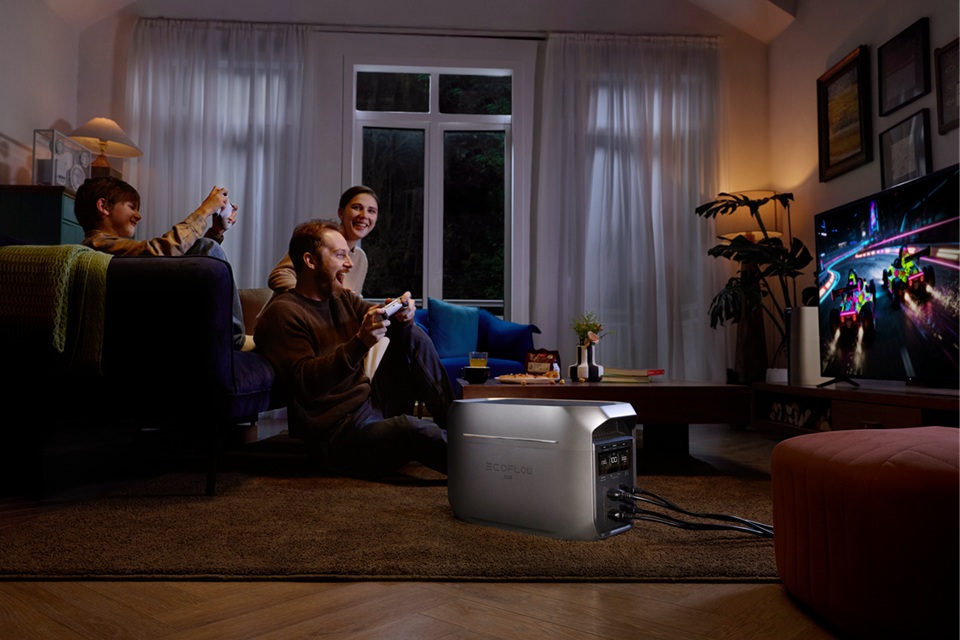
When your needs go beyond small electronics, the EcoFlow DELTA Series becomes more relevant. A DELTA-class power station provides greater capacity and output for operating multiple devices or selected household appliances. Depending on the model and appliance requirements, this can include fans, refrigerators, workstations, entertainment equipment, and other household electronics. Compatible DELTA models can also work with solar panels to help replenish the battery during daylight hours.
Match the specific DELTA model's output and capacity to your appliances. More capacity doesn't automatically mean every appliance can run indefinitely.
If you want a larger home energy system
For homeowners looking for a more permanent energy storage setup, EcoFlow PowerOcean provides a different approach. Rather than a portable battery you move around the house, it's designed as part of a broader residential energy system where solar generation, battery storage, and grid electricity can work together. This makes it relevant not only for brownout protection, but also for homeowners interested in:
- Solar energy
- Home energy storage
- Longer backup capability
- Better use of generated solar power
- Reducing reliance on grid electricity
- Long-term energy management

10. How Can the EcoFlow App Help?
Having backup power is useful. Knowing what's happening with your energy is even better. Compatible EcoFlow products can connect to the EcoFlow app, allowing you to monitor and manage your system depending on the model. Information may include:
- Battery level
- Power input and output
- Solar input
- Charging status
- Energy consumption
- Estimated remaining runtime
- Charging settings
- Remote monitoring or control
When the unit and the required internet/Wi-Fi connection are available, you can monitor your system remotely through the app instead of standing beside the power station. This is especially useful during a long brownout when you're deciding which appliances should keep running.
Weather information can help with planning
Weather conditions can affect solar generation. The EcoFlow app may also provide weather-related information depending on the product and current app functionality. For the most accurate details, check EcoFlow's official website, app documentation, or official videos, because features can vary depending on the product and software version.
11. Don't Buy the Biggest Power Station Just Because You Can
A bigger battery isn't automatically a better purchase. If your main goal is keeping your Wi-Fi, phone, lights, and laptop running for several hours, you may not need the largest system. If you need to operate a refrigerator, multiple fans, work equipment, or other appliances, your requirements increase. If you're preparing an entire home for extended outages while integrating solar energy, you're looking at a different type of energy solution.
- Small needs → Portable backup
- Larger needs → Higher-capacity power station
- Longer outages + solar → Solar + power station
- Long-term home energy needs → Hybrid home energy storage
This approach can help prevent you from spending more than necessary while also avoiding a system that is too small for your actual needs.
12. How to Prepare for El Niño and Summer Brownouts
You don't want to discover that your backup system isn't enough during the next outage. A little preparation can make a significant difference.
- Identify your essential devices — make a list of the appliances and electronics you need most: Communication → Work → Cooling → Food → Security.
- Check their power requirements — look at the label or manufacturer's specifications and record the approximate wattage.
- Decide how long you need backup — 2–3 hours, 6 hours, overnight, a full day, or longer? This affects the battery capacity you need.
- Consider solar charging — if brownouts can last for extended periods, compatible solar panels can replenish your battery during daylight hours.
- Think about everyday energy use — for a solar + battery home setup, consider how it can make better use of available solar energy on normal days and potentially reduce reliance on the grid.
- Keep your power station ready — don't wait for a storm or brownout to charge it. Keep it accessible and sufficiently charged.
- Test your setup — connect your essential devices before an emergency to see your actual power consumption and how long the battery can realistically last.
Need help choosing the right backup power station? Read our EcoFlow Portable Power Station Buying Guide to find the right option based on your power needs, runtime, and use case.
Frequently Asked Questions
Can a power station be used during a brownout?
Yes. A portable power station can provide stored electricity for compatible electronics and appliances when grid electricity is unavailable.
Can an EcoFlow power station work as a UPS?
Some EcoFlow models provide UPS functionality. Check the specifications of the specific model because features can vary between products.
Can solar panels charge an EcoFlow power station during a brownout?
Yes. Compatible EcoFlow solar panels can recharge compatible power stations when sufficient sunlight is available and the system's solar input requirements are met.
Can solar panels help extend power station usage?
Yes. During daylight hours, compatible solar panels can replenish a compatible power station, helping extend the usable energy available during longer outages.
Do solar panels need maintenance?
Yes. Dust and dirt can accumulate on solar panels and affect how effectively they receive sunlight. Regular cleaning and basic system checks can help maintain performance.
Can an EcoFlow power station run a refrigerator?
Some models can run compatible refrigerators. Check both the refrigerator's running and startup power requirements and compare them with the power station's output capabilities.
Can a power station run an air conditioner?
Some higher-output systems can run compatible air conditioners. However, runtime depends heavily on the air conditioner's actual power consumption and the battery capacity available.
Can PowerOcean help reduce electricity consumption from the grid?
A compatible PowerOcean hybrid setup can combine solar generation, battery storage, and grid electricity, allowing available solar energy to contribute to household consumption and potentially reduce reliance on grid electricity. Actual savings depend on your home's energy usage, solar generation, electricity rates, system configuration, and operation.
Can I monitor my EcoFlow system remotely?
Compatible EcoFlow products can be monitored and managed through the EcoFlow app. Remote functionality depends on the specific product and the required internet/Wi-Fi connection.
How do I choose the right EcoFlow power solution?
Start with three questions: What do you need to power? How much power do those devices consume? How long do you need them to run? Then consider whether you also need solar charging, portable backup, or a larger home energy storage system.
Conclusion
The real problem with a summer brownout isn't simply that the electricity disappears. It's everything that disappears with it: your cooling, your internet connection, your ability to work, your ability to keep food cold, your communication, and your home security.
When temperatures are already reaching uncomfortable levels, losing electricity can make an outage much harder to deal with. That's why preparing for El Niño, extreme summer heat, and unexpected brownouts should go beyond simply buying a backup battery.
Start by identifying what matters most. Check how much power those devices require. Decide how long you need them to run. Then decide whether you need portable backup, solar charging, or a more comprehensive home energy system.
- For basic electronics, the EcoFlow RIVER Series can provide portable backup power.
- For higher power requirements and selected household appliances, the EcoFlow DELTA Series provides greater capacity and output.
- For solar integration, battery storage, and long-term home energy management, EcoFlow PowerOcean provides a larger residential energy system.
And when compatible solar panels are added to the setup, solar energy can help replenish stored power during daylight hours, potentially extending usable energy and reducing reliance on grid charging.
When the next brownout happens, the best backup power system isn't necessarily the biggest one. It's the one that keeps the things that matter most running when you need them.

Share: